
Is Your Cat Secretly Dehydrated Right Now?
Unlocking the Mystery of Feline Hydration and Clever Tricks to Keep Them Sipping
Picture this: your elegant feline companion delicately dips a paw into their water bowl, flicks a few droplets, then saunters away without taking a single sip. Sound familiar? Cats are desert-descended creatures with a notoriously low thirst drive, a trait inherited from ancestors who derived moisture primarily from prey. Modern house cats often carry this evolutionary quirk into our homes, making dehydration a silent threat. Studies reveal that chronic under-hydration contributes to urinary crystals and kidney issues – the leading causes of premature death in indoor cats. Yet most pet owners remain blissfully unaware as their cats politely ignore stagnant water bowls day after day.
The hydration paradox begins with biology. Cats possess only 470 taste buds compared to humans' 9,000, rendering them indifferent to plain water's flavor. More critically, their vision struggles to detect still water surfaces. In the wild, flowing streams signaled freshness and safety from contamination. Your kitchen water bowl? To your cat, it might as well be invisible. This explains why many felines develop bizarre rituals – drinking from dripping faucets, stealing sips from human glasses, or patting water surfaces before drinking. These aren't just quirky habits; they're survival mechanisms screaming that conventional bowls fail their fundamental needs.
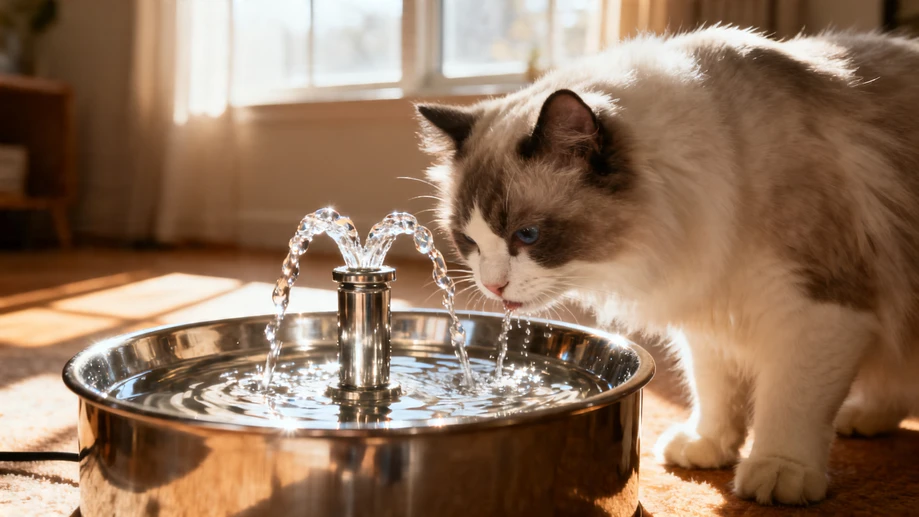
Revolutionize hydration with moving water stations. Cats exhibit a 70% increase in water consumption when presented with circulating fountains versus stagnant bowls. The gentle burble mimics natural streams, triggering instinctive drinking behaviors. Opt for ceramic or stainless-steel models with quiet pumps and multiple flow settings – many cats prefer gentle ripples over Niagara Falls-style cascades. Strategic placement matters too: position fountains away from litter boxes and food bowls (cats instinctively avoid drinking near feeding areas) and create multiple hydration stations throughout your home. A fountain near a favorite sunbathing spot often becomes a hit!
Water isn't the only hydration hero. Transform mealtime into a moisture-boosting opportunity by incorporating wet food, which contains 70-80% water compared to kibble's mere 10%. For reluctant wet food eaters, try bone broth ice cubes – simmer pet-safe bones (never cooked) with water for 24 hours, strain, and freeze. These nutrient-rich cubes can be added to water bowls or served as treats. Another ninja trick: place water bowls in unexpected locations. Cats adore novelty, so a small dish on a windowsill or bathroom counter often attracts curious licks. Some felines even enjoy "hunting" for water – hide small bowls behind furniture legs or under tables to trigger their exploratory instincts.
Monitor hydration like a feline detective. Perform the "skin tent test" by gently pinching the skin between your cat's shoulder blades. Well-hydrated skin snaps back instantly; delayed retraction signals dehydration. Check gum color – healthy pink indicates good circulation, while pale or sticky gums require veterinary attention. Track litter box output: well-hydrated cats produce larger clumps with minimal odor. Finally, observe drinking behavior. Consistent visits to water sources or audible lapping sounds indicate success. Remember that hydration needs vary – a 10-pound cat typically requires about one cup daily, but active cats, nursing mothers, or seniors may need more. When in doubt, consult your vet to create a personalized hydration strategy.