
5 Things Your Cat's Tail Reveals About Its Secret Thoughts
Decoding the Silent Language of Feline Tails
That fluffy appendage swishing behind your cat isn't just for balance – it's a furry semaphore system broadcasting emotions in real time. While humans rely on facial expressions, cats communicate volumes through tail choreography. A 2021 University of Pennsylvania study confirmed tail movements correlate with specific neurological signals, proving tails function as emotional barometers. Understanding this silent language transforms how we interpret everything from the slow blink to the midnight zoomies. Forget meowing; the tail never lies about whether your cat feels threatened, affectionate, or utterly bored with your Netflix choices.
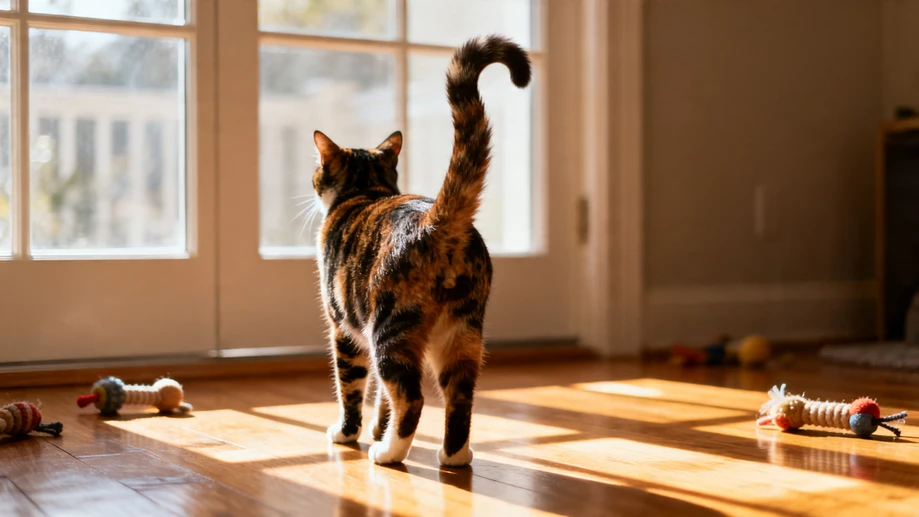
Consider the upright tail: a feline exclamation point of happiness. When your cat approaches with its tail perpendicular like a furry antenna, it's signaling trust and contentment – essentially a kitty handshake. Contrast this with the low-hanging tail tucked beneath the body, indicating fear or submission during vet visits. The infamous bottle-brush tail? That's full-system panic mode where every hair stands electrified. More subtle is the gentle tail-wrap around your ankle while cooking, a quiet claim of ownership and affection. Even the rhythmic thumping against the floor while napping reveals dream-state activities.
Tail language becomes especially crucial during multi-cat households. Observe two cats meeting: slow-wagging tails signal cautious curiosity, while rapid twitching at the tip often precedes a spat. The "tail hug" – when cats entwine tails while passing – functions as a peace treaty. Interestingly, kittens develop tail vocabulary early; orphaned cats raised without siblings frequently display abnormal tail signals, proving these behaviors are learned through social interaction. Veterinarians now use tail positioning charts alongside standard exams to assess stress levels in anxious patients.
Some tail messages defy obvious interpretation. The question-mark tail (curved at the tip like a hook) combines curiosity with playfulness – perfect for initiating games. Meanwhile, the sleeping tail flick deserves its own category; that isolated twitch during naps indicates light sleep where the brain remains alert to surroundings. Ever notice your cat's tail vibrating rapidly while upright? This "quiver" typically occurs during highly positive moments, like greeting favorite humans or anticipating meals. It's essentially the feline version of happy dancing.
Mastering tail literacy prevents misunderstandings. Punishing a cat for aggression during bottle-brush tail moments only escalates fear, while recognizing the slow tail-sway during petting sessions (a sign of overstimulation) prevents accidental nips. Try mirroring their language: slowly blinking while their tail rests calmly reinforces bonding. Keep tail-watching sessions discreet – cats notice staring – but do note environmental triggers causing specific signals. That sudden tail-fluff when the vacuum roars? Your feline meteorologist just predicted a household storm.