
Do Bunnies Redecorate When You're Not Looking?
The Secret Life of Pet Rabbit Accessories
You meticulously arrange the perfect hay rack near the litter box, position the water bowl just so, and fluff the bedding in the cozy corner hideaway. You leave for work, confident in your bunny-proofed paradise. Return hours later, and chaos reigns. The hay rack lies overturned like a felled tree, the water bowl has migrated mysteriously across the room, and the bedding is now a sculpted mountain range worthy of a miniature Alps. Welcome to the clandestine world of rabbit interior design, where your carefully chosen accessories become mere suggestions in the paws of a determined lagomorph. This isn't destruction; it's a complex expression of instinct, comfort, and sheer bunny willpower.
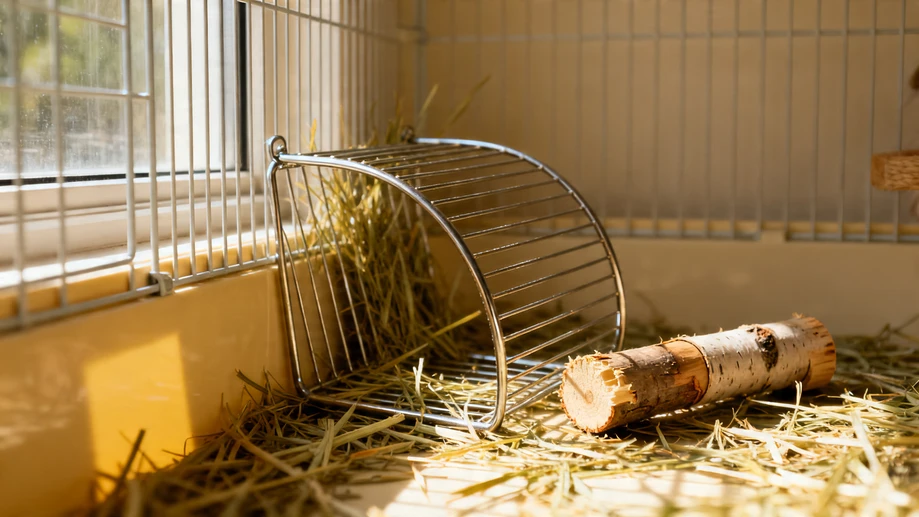
Take the humble hay rack, a staple in every rabbit home. Humans install them to keep hay clean and accessible. Rabbits, however, see them as puzzles, obstacles, or perhaps inconvenient buffets. That cleverly designed rack with vertical bars? It’s not just for holding hay; it’s a multi-purpose tool. Watch a rabbit yank strands deliberately, not just to eat, but to pull large clumps *through* the bars onto the floor. They create hay piles in specific spots – often far from the rack itself – mimicking the wild behavior of gathering nesting materials or creating comfortable, scent-marked resting zones. The overturned rack isn’t always an accident; sometimes, it’s a deliberate act to access the hay mountain trapped inside or simply to create a more satisfying dining experience on their own terms.
The litter box area transforms into a rabbit's personal art studio. Despite your best efforts with high-sided boxes and absorbent litter, your bunny might engage in "creative redistribution." Kicking litter out isn't mere messiness; it’s about adjusting texture, depth, and scent distribution. They dig to create the perfect consistency for waste burial, an instinct vital for hygiene and predator avoidance in the wild. The scattered litter and hay around the box perimeter? That’s a deliberate boundary marker, a scent-soaked moat declaring, "This is MY space." Even the seemingly random scattering of fecal pellets (those harmless, dry cocoa puffs) outside the box serves a purpose – territorial communication, subtly marking pathways and resting spots within their domain.
Chew toys and wooden hideouts bear the most visible signs of a rabbit's "renovations." That adorable wooden castle isn't just a shelter; it's a dental maintenance station and a stress reliever. Rabbits' teeth grow continuously, and gnawing is essential. But observe closely: they don't just chew randomly. They target specific edges, corners, or protruding bits, systematically reshaping the structure. This isn't vandalism; it's precision engineering driven by instinct. They might widen a doorway, smooth a rough edge that irritates their whiskers, or create a new lookout point. The resulting wood shavings become part of the bedding or nesting material, demonstrating a remarkable lack of waste in their redesign process.
Understanding this secret life is key to harmonious cohabitation. Instead of fighting their instincts, work with them. Provide *lots* of safe chewables (applewood, willow, untreated seagrass mats) to satisfy the gnawing urge and protect furniture. Offer digging alternatives like a deep box filled with shredded paper or safe soil. Place hay racks securely, but also scatter hay directly in litter boxes and resting areas to encourage natural foraging. Use heavy, tip-proof ceramic bowls. Observe *where* your rabbit prefers to pile hay or dig, and adapt your setup accordingly – perhaps placing a dig box right there. Recognize that some "mess" is simply natural rabbit behavior. By respecting their innate need to interact with and modify their environment, you transform frustration into fascination. You’re not just a pet owner; you’re the audience for a tiny, furry architect constantly perfecting their masterpiece – one overturned hay rack and meticulously chewed castle turret at a time.