
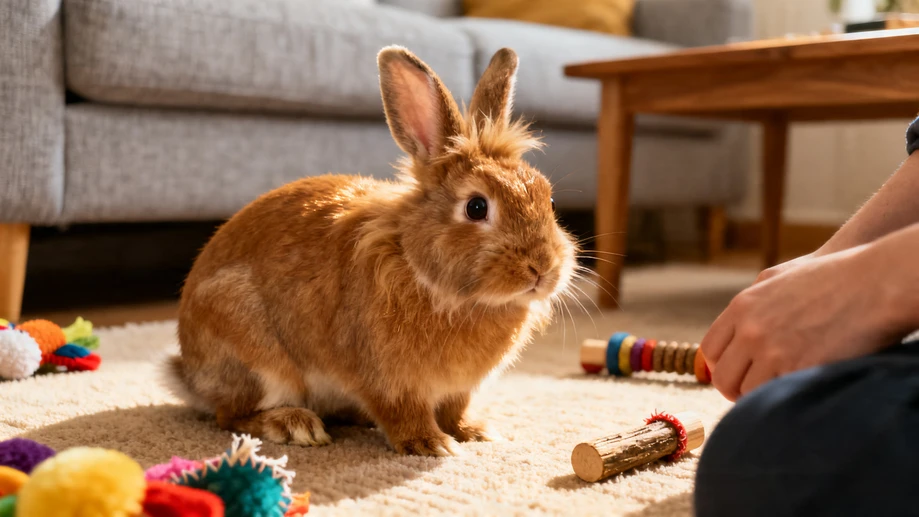
Do Rabbits Really Understand You?
Unraveling the surprising emotional intelligence and daily antics of pet bunnies that make them incredible companions.
Rabbits are often dismissed as simple, fluffy creatures, but beneath those twitching noses lies a world of unexpected intelligence. Many pet owners report astonishing behaviors: their rabbits not only recognize their own names when called but also respond to familiar voices with excited hops or curious nudges. This isn't mere coincidence; it stems from rabbits' keen senses and social nature. In the wild, they rely on subtle cues to survive, and domestication has amplified this ability to bond with humans. Imagine the delight when your bunny greets you at the door after work, or patiently waits by its food bowl as you prepare dinner. These moments reveal that rabbits aren't just passive pets—they're active participants in our lives, capable of forming deep emotional connections that challenge the stereotype of them being aloof or unintelligent.
A typical day in a rabbit's life is filled with clever antics that showcase their problem-solving prowess. Watch closely as your bunny navigates a homemade obstacle course of cardboard tunnels, stopping to ponder a new path before darting through with precision. Or, set up a simple puzzle toy—like a treat ball that requires rolling to release snacks—and see how quickly they learn to manipulate it with their paws. This isn't playtime alone; it's cognitive exercise. For instance, rabbits can differentiate between toys, favoring a soft chew block over a noisy bell, and even develop routines, like demanding attention by nudging your leg when they want cuddles. These actions aren't random; they demonstrate memory retention and adaptability, turning everyday interactions into mini-adventures that keep owners entertained and amazed.
What makes rabbit intelligence so captivating is how it intertwines with their endearing personalities in real-life scenarios. Take Flopsy, a Dutch rabbit whose owner shared how she learned to "knock" on her cage door with a gentle thump when she needed the bathroom—a trick she picked up after observing human routines. Another heartwarming story involves Thumper, who formed a bond with the family dog, communicating through soft nose bumps to initiate playtime without any aggression. These narratives aren't exceptions; they're common in rabbit communities online, where owners swap tales of their pets outsmarting child locks on treat cabinets or mimicking household sounds. Each anecdote underscores rabbits' ability to read emotions: they'll comfort a sad owner with quiet snuggles or become visibly excited during favorite TV shows, proving that their intelligence isn't just about tricks; it's about empathy and fitting seamlessly into family life.
Scientific research sheds light on this phenomenon, confirming rabbits possess brains wired for learning and emotion. Studies show they excel at associative memory, connecting sounds like the crinkle of a treat bag with rewards, which triggers joyful binkies (those signature jump-twists). Brain scans reveal activity in areas linked to social bonding, similar to dogs, allowing rabbits to distinguish between familiar and unfamiliar humans with remarkable accuracy. This isn't science fiction—it's grounded in biology. Rabbits evolved to live in colonies, relying on communication for survival, which translates to pet settings as an ability to learn names, follow commands like "come" with consistent training, and even anticipate daily events such as feeding times. Understanding this science enriches our appreciation, showing that their "bunny logic" is a blend of instinct and adaptability, making them delightful partners in domesticity.
To nurture this hidden genius, owners can easily incorporate enriching activities that make daily life more engaging for both rabbit and human. Start by setting up a stimulating environment: add tunnels, puzzle feeders, and safe chew toys to encourage exploration, which prevents boredom and promotes mental agility. Engage in regular training sessions using positive reinforcement; reward small successes, like hopping onto a low platform, with a leafy treat. Bonding time is key—spend quiet moments petting your rabbit to build trust, as they pick up on your moods and respond accordingly. Over time, these interactions reveal unique traits: one rabbit might become a "doorbell" by alerting to visitors, while another invents games like hide-and-seek. The key is consistency; rabbits thrive on routine, and with patience, you'll unlock a world where your pet isn't just a passive observer but an intelligent, responsive friend.
In the end, the question isn't whether rabbits understand us—it's how deeply they do, transforming our homes into hubs of shared joy. By embracing their communication and providing simple enrichment, we foster bonds that rival those with more traditionally "smart" pets. So, the next time your bunny does something clever, like fetching a dropped toy or curling up beside you without a word, savor the moment. You're not just sharing space with a pet; you're living with a secret genius whose silent wisdom makes every day a little brighter.