
5 Unexpected Ways Your Parrot Is Smarter Than Your Phone
Discover the feathered genius living in your living room
Your phone can navigate, translate languages, and remind you of appointments. But have you ever watched your parrot strategically steal a cashew right from your snack bowl while maintaining innocent eye contact? That, my friends, is a level of cunning planning and problem-solving your pocket device simply can't replicate. Parrots, particularly African Greys, Amazons, Cockatoos, and Macaws, possess cognitive abilities rivaling young children. Forget just mimicking words; they understand concepts like same/different, quantity, and even the concept of zero, something concrete thinkers struggle with. It's not just noise; it's sophisticated mental software wrapped in vibrant feathers.
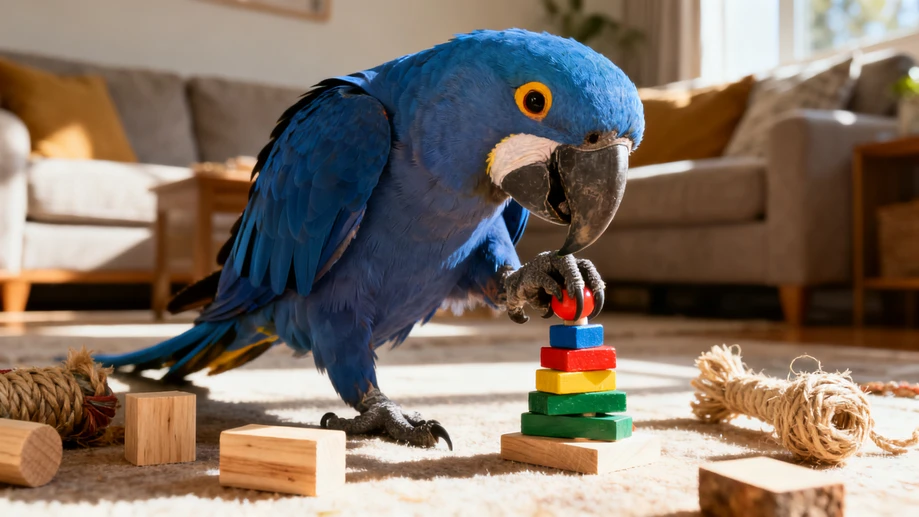
Witness the toolbox bird. Wild Goffin's cockatoos famously fashion tools from sticks to retrieve out-of-reach food. Your pet parrot might not be whittling wood, but watch carefully. That paperclip mysteriously bent to reach a dropped pellet under the sofa? The deliberate shoving of a toy to block a swinging door? That's tool use! They experiment and learn through observation. If you strategically place treats just out of beak reach near everyday objects (under a cup needing flipping, behind a light cardboard box needing pushing), you might just witness your feathered Einstein inventing a solution. Your phone waits for your command; your parrot creates its own hacks.
Your parrot isn't just listening; it's reading the room – your room. They are exceptional observers of human emotion and social dynamics. Notice how your feathered companion might become unusually quiet or start softly whistling a calming tune when you're stressed after a long day? Or the exuberant, noisy display when they sense family laughter and excitement? Studies, like those with the famous African Grey, Alex, showed they not only label objects but also understand emotional states associated with words like "happy" or "sad." They pick up on subtle cues – your body language, tone of voice, even the pace of your movements – tailoring their responses accordingly. Your phone gives a generic "low battery" warning; your parrot offers targeted emotional resonance.
Forget mere playback. Parrot communication involves context, expectation, and sometimes, hilarious demands. It’s one thing for them to say "Hello" when you enter a room. It's another level entirely when they clearly say "Want grape?" while staring intently at the fridge at precisely 10 AM, grape time, or shout "Step up!" when *they* want to come out of their cage. They learn that specific sounds create specific outcomes. They associate words with objects and actions with surprising accuracy. They understand the *power* of sound to manipulate their environment – namely, you. The phone responds to pre-programmed commands; your parrot invents commands *for you*.
So, the next time your parrot is loudly shredding its brand-new, expensive wooden toy instead of playing with it "properly," or meticulously dismantling the newspaper lining its cage, remember: this isn't destruction; it's essential cognitive enrichment. Parrots are natural foragers and problem-solvers in the wild. Captivity must provide outlets for these powerful instincts. Hiding treats inside foraging toys, teaching them simple tricks using positive reinforcement, or rotating their toys regularly are not just fun activities; they are mental gym workouts preventing boredom and fostering that incredible intelligence. Your phone needs a charger; your parrot needs mental gymnastics.