
Have You Ever Dug Out All the Surprising Hidden Fun Facts Behind Smiling Fluffy Samoyeds
This casual popular science piece breaks down little-known daily quirks and lovely traits of Samoyed pets that even long-time owners might miss.
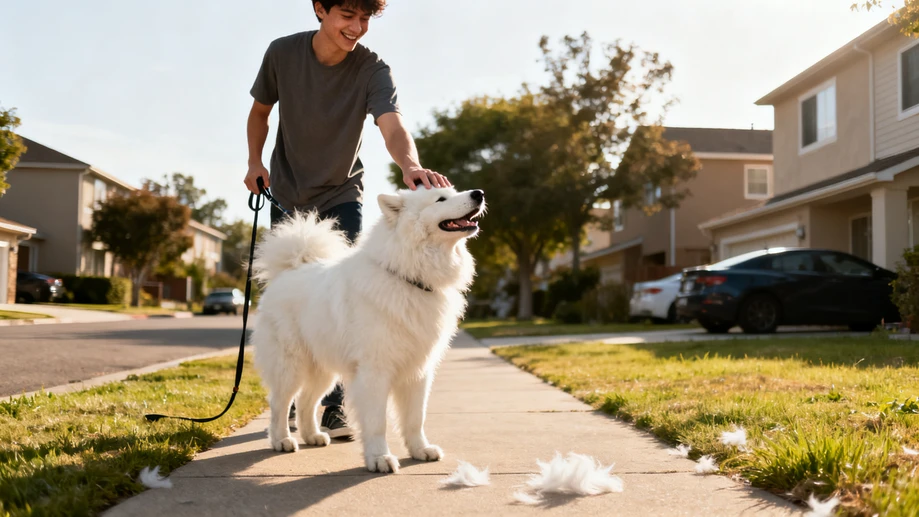
It is almost impossible to walk a Samoyed down a busy residential street without being stopped by at least three passersby reaching out for a quick pet, most of them commenting that the dog looks like a walking cloud of cotton candy that never stops grinning. That iconic upturned mouth that defines the breed is not a trick trained by professional handlers, nor a random quirk that pops up only when the dog is getting treats, it is a natural anatomical feature inherited from thousands of years of breeding by the indigenous Samoyede people who lived in the frigid Arctic tundra of Siberia. Early Samoyeds were not just kept as working sled dogs, they lived inside the family tent full time, curled up next to small children to keep them warm through freezing nights, so their naturally friendly facial structure gradually became a beloved marker of the breed that signals zero aggression to everyone around. A lot of first time Samoyed owners joke that their new puppy acts like a local celebrity within a week of moving into the neighborhood, and most of the attention it gets is fully earned by its naturally warm, unguarded personality.
The most famous running joke among Samoyed owners is the breed’s legendary snowstorm level seasonal shedding that leaves no corner of the house untouched, even if you vacuum every single day. Their double layered thick coat is designed to keep them warm in temperatures as low as minus 45 degrees Celsius, with a coarse waterproof outer layer and a soft dense undercoat that traps warm air close to the skin. When shedding season hits twice a year, the loose undercoat drifts through the air like tiny white snowflakes, and you can pull tufts of Samoyed fur out of your coffee mug, your laundry dryer filter, and even the inner lining of your winter jacket months after you thought shedding season was over. A lot of new owners make the mistake of shaving their Samoyed completely short in summer to reduce shedding, but this actually ruins their natural temperature regulation system, leaves them vulnerable to sunburn, mosquito bites and itchy skin conditions that take months to heal.
Behind that silly, sweet, constantly smiling exterior lies a surprisingly stubborn, independent thinking working dog that will never blindly follow every order you give it if it judges the situation to be unsafe. Samoyeds were bred to lead sled teams across hundreds of kilometers of unmarked ice and snow, so they developed a sharp sense of environmental judgment that makes them perfect at avoiding hidden cracks on frozen lakes that humans might not notice. Modern domestic Samoyeds carry that same instinct, so when you try to pull them across a busy street full of speeding cars, or force them to walk past a dark narrow alley that gives them a bad vibe, they will plant their paws firmly on the ground and refuse to move no matter how hard you tug on the leash. A lot of owners also complain that their Samoyeds rank near the top of all dog breed chew damage lists, but this destructive behavior is almost never a sign of bad temper or revenge, it is just their way of releasing excess built up energy that was originally designed to power 40 kilometer long sled runs every single day.
There are hundreds of tiny heartwarming quirks that only people who live with Samoyeds full time get to experience, traits that never show up in the basic breed introduction pages online. If you are having a bad day crying on the couch, your Samoyed will drop whatever toy it is playing with immediately, walk over to you slowly, and rest its heavy fluffy head on your lap without asking for treats or getting excited to go out for a walk. It will stay there as long as you need, letting you bury your face in its soft fur for as long as you want, and never get impatient even if you rub its ears the wrong way. Samoyeds also have an extremely strong nurturing instinct, so most of them get along perfectly with cats, small pet rabbits, even tiny hamsters that live in cages around the house, they will never try to chase or hurt smaller creatures, because their ancient breeding history trained them to guard all the small vulnerable members of the nomadic camp.
Raising a Samoyed does come with a small set of very specific, easy to miss daily care tips that make the experience far less chaotic for new owners. You should never skip their 30 minute daily grooming session with a slicker brush, this simple routine not only cuts down the amount of floating fur around your house by more than 70 percent, it also prevents painful tangled mats from forming close to their skin that require a trip to the professional groomer. You should never feed them large amounts of frozen food even on the hottest summer days, their sensitive stomachs will react immediately with loose stools that make a huge mess all over your carpet. Even with all the shedding, occasional stubbornness and unexpected vet bills, every Samoyed owner will agree that the moment you take them out to a snow covered park for the first time and watch them roll around and run at full speed like a fluffy bouncing cloud, all the tiny inconveniences are 100 percent worth it.